The Gig Economy
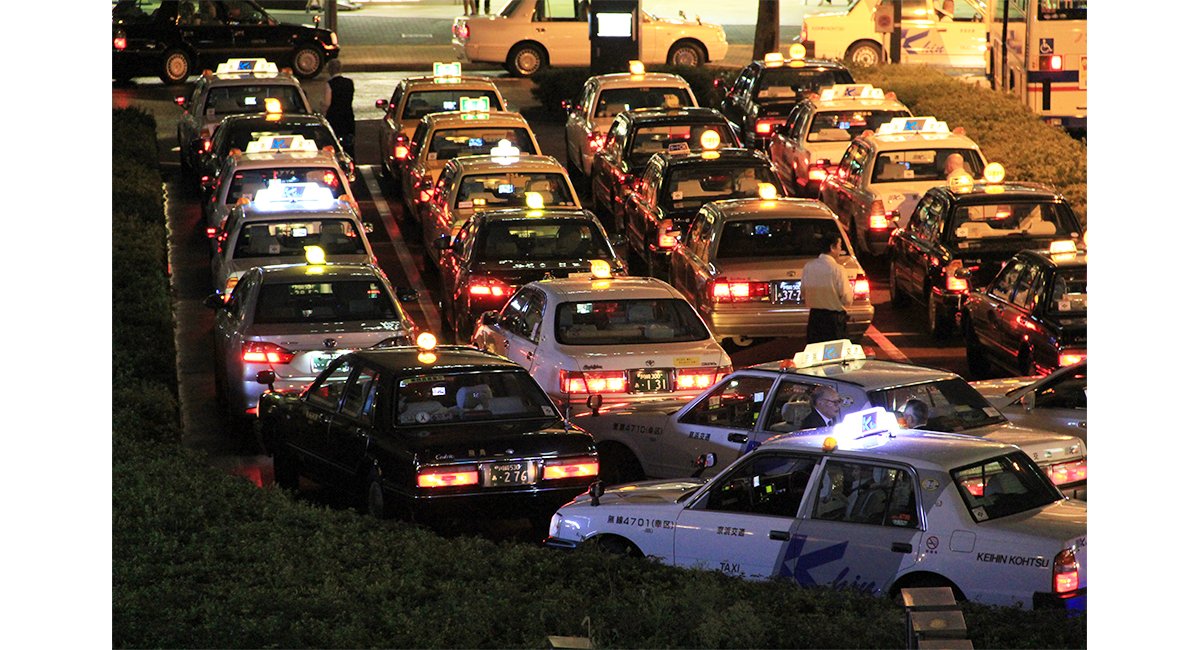
Transport for London has announced it will not renew ride-sharing app Uber’s license because it has identified a “lack of corporate responsibility” in the company. But did the company deserve to have its licence revoked?
A number of Japanese banks are set to launch a new national digital currency in a bid to wean citizens off cash, the Financial Times reports.
The FT says that a consortium led by Mizuho Financial Group and Japan Post Bank plan to launch the new digital currency in time for the Tokyo 2020 Olympics.
The new project, which has the support of Japan's central bank and regulators, aims to develop technology to allow Japanese people to pay for goods and services with their smartphone.
To say the words, “I agree”—whether it’s agreeing to join an organization, or submit to a political authority, or subscribe to a religious faith—may be the basis of every community.
But to say, I disagree; I refuse; you’re wrong—these are the words that define our individuality, give us our freedom, seize our attention, energize our progress, and make our democracies real.
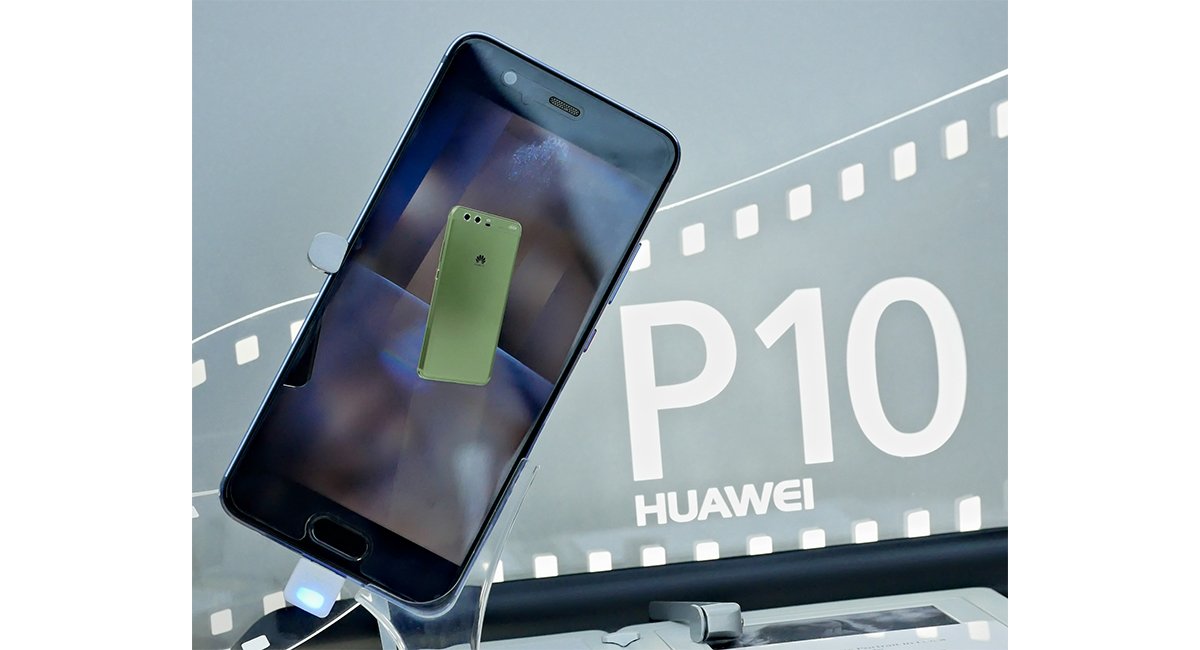
China’s Huawei technologies, the world’s third largest smartphone maker after Apple and Samsung, has announced plans to build new R&D facilities in Chiba, Japan.
This news shows the general trend of Chinese corporations becoming multinationals, but what struck Japanese people is not this news, but other news that Huawei Japan is offering the starting monthly salary of 400,000 Japanese yen.
One of my favorite economists, Dan Ariely, tells this story about a locksmith. When the locksmith was new at his job, when he was an apprentice, he took a really long time to open a lock. And people saw him working away, struggling, really having a hard time. And often they'd end up giving him a tip. But then when the locksmith got better at his job, when he got so good at his job he could open pretty much any lock in just a minute or two, then his customers started complaining. They were like, you want $200 for that? This took you, like, 30 seconds. And you can see why, right?
Amazon and Microsoft are teaming up to get their virtual assistants to talk to each other.
Someone with an Amazon Echo smart speaker might use Cortana to book a meeting or to check a calendar, Amazon suggested in a press release announcing the news on Wednesday. Or Cortana users could control their smart home via Alexa.
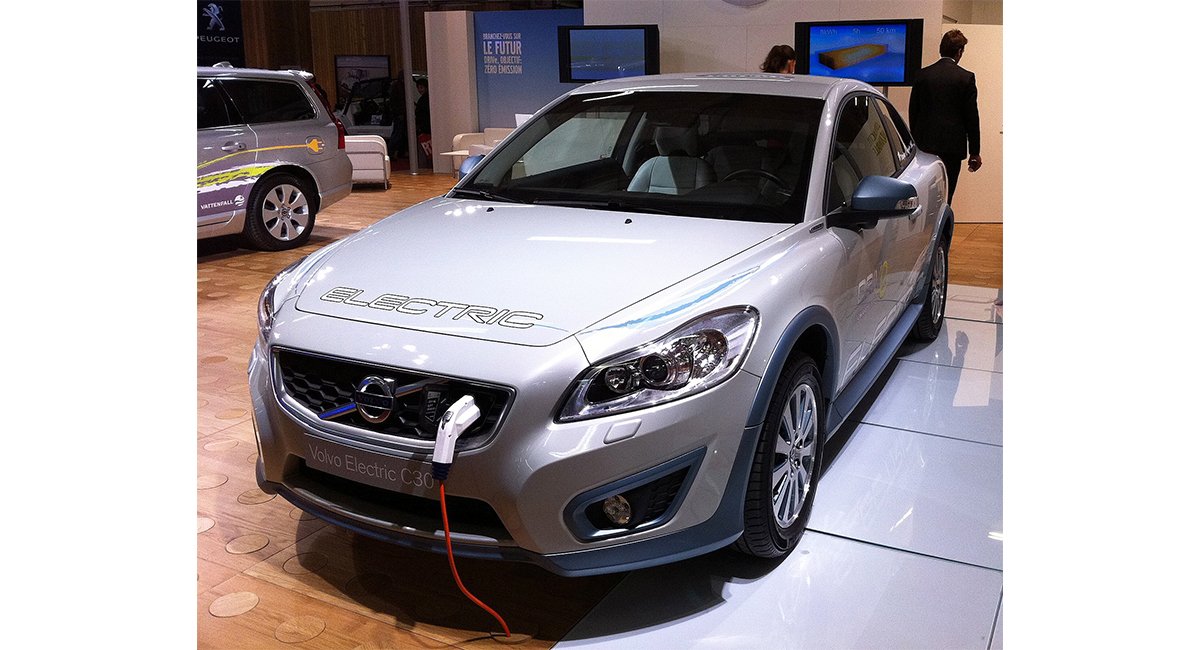
In 2013, Volvo announced a potentially revolutionary approach to designing electric vehicles (EVs). It wanted to replace some of the steel body panels in its cars with carbon fiber composite materials that can store power like a battery.
The rechargeable panels would be composed of multiple layers of carbon fiber, which are insulated from each other by fiberglass inserts. The result is a structural component that can be charged like the battery.
A test of self-driving bus services organized by the transport ministry kicked off in Tochigi Prefecture on Saturday.
The ministry hopes to launch the autonomous bus services in fiscal 2020 to provide a means of transportation for elderly people living in hilly and mountainous areas with dwindling populations.
The ministry hopes automated public transport services will help elderly people who have trouble visiting hospitals or shopping because they can no longer drive or their bus services have been canceled.
Japanese automotive giant Toyota has made a strategic investment in South East Asia taxi-hailing service Grab.
Not every successful product is “the best” product in its category.
The point of Ikea or Toyota isn’t to be the greatest, most high-end offering in the realm of houseware or cars, the point is to meet a practical consumer need at an attractive price. There are Ferraris and Porsches in the marketplace, too, but making “the best” car isn’t necessarily a more successful business strategy than making a good enough car at a reasonable price.
Amazon.com Inc. spent its first day as the owner of a brick-and-mortar grocery chain cutting prices at Whole Foods Market as much as 43 percent.
In a sign of how the retailer is changing, the Amazon Echo, a voice-activated electronic assistant, was also for sale, for $99.99—a sharp pivot into electronics for a company known for kale and quinoa. The Echo Dot, a smaller version, was advertised for $44.99.
A startup in South Korea is making headlines for only hiring staff that are aged 55 years and over.
The founder of content monitoring company EverYoung established the rule to prove the futility of age discrimination – a phenomenon that's reportedly prevalent in modern Korean corporate culture.
Employees at EverYoung monitor blog content on Korean web portal Naver and detect sensitive information on Naver Maps, as well as perform other IT tasks, including running coding classes for school students.
On more than 445 hectares of land dedicated exclusively to Japanese corporations, titans such as Toyota Motor Corp., Daikin Industries Ltd. and Hitachi Ltd. have clustered together to protect themselves from the vagaries of India’s chaotic business landscape.
“In India, the size of investment matters,” said Takayoshi Tokimune, the managing director of the India subsidiary for Dainichiseika Color & Chemicals Manufacturing Co. “So we flocked together.”
Major Japanese agricultural machinery makers are developing self-driving tractors. The government plans to support the introduction of these tractors amid growing hopes that such machines will help farmers cope with labor shortages at a time when many are aging and face difficulties finding successors.
In June 2017, Kubota Corp. started selling the country’s first tractors with autonomous driving functions on a trial basis. Utilizing the Global Positioning System (GPS), the tractors can keep tabs on where they are operating.
Uniqlo has made the most of inexpensive labor in Asia to become a leading global SPA player. But making goods overseas is not necessarily compatible with responding quickly to customer needs. That is why the company is rethinking the typical approach of churning out products in emerging economies.
To more swiftly respond to customer needs, the company is working on a system for sending out goods in as few as 10 days. To achieve that, airplanes will be essential, although costly.
Vice president of Amazon Echo, Mike George, explained: "We have a thing called 'working backwards.' The first thing we do is we write a press release, ignoring every technical thing we can’t do for now. It’s our aspirations. We also write FAQs where we identify every question we would receive as if we issued the press release. We answer the question in aspirational ways too, ignoring, for the moment, the technical hurdles. In some cases we actually build things."
In the next year or two, the workplace faces an unprecedented situation where for the first time, due to the fact that we’re all living longer, five generations may be working side by side: Veterans (pre-World War II); the Baby Boomers (World War II – 1960s); Generation X (mid-60s – late 1970s); Millennials (aka Generation Y) (1979 – 1991); and last, but not least, the largely unknown factor: Generation Z, born after 1992.
At SoftBank Group's annual shareholders meeting in Tokyo on Wednesday, founder and chief executive Masayoshi Son said: "Some say SoftBank is a mobile phone company, but that's wrong [...] We are an information revolution company. A cellphone is just a device. From now on, we will be in an age where all infrastructure will be connected by information networks."
Son has about 30 targets lined up in emerging sectors such as artificial intelligence, robotics and the internet of things. SoftBank, he made it clear, intends to be at the forefront of all these fields.
Yamato Transport Co. has modified its parcel delivery time slots to reduce the burden on overworked drivers handling a sharp increase in parcels.
As of Monday, the door-to-door parcel delivery firm no longer allows noon to 2 p.m. as a designated delivery time so drivers can take a lunch break.
In addition, the company replaced the latest time slot in the day of 8 p.m. to 9 p.m. with a new slot of 7 p.m. to 9 p.m. to avoid the concentration of delivery orders in the final one hour.
Japan began introducing bilingual traffic signs on Saturday as the number of foreign visitors increases ahead of the 2020 Tokyo Olympics and Paralympics.
By the time the games open, about 35,000 of the 140,000 stop signs in the capital will have been replaced with ones in both Japanese and English near the Olympic venues and in other areas, the Metropolitan Police Department said.
Along with the new stop signs, bilingual slow-down signs will also be introduced.