Personality types and business
Many companies use personality tests to determine the characters of their employees. They say that, if colleagues know each other’s personality type, they can work together more effectively.
Andrea Love uses wool to "paint" pictures, make felt figures, and create animated films. She works as a freelancer in Washington state, from her basement studio. Clients often come to her for commercials and short documentary films. One of her projects was a 4½-minute documentary for the Northwest Straits Initiative. The organization is dedicated to preserving the waters and beaches of the northwest corner of the U.S.
Recently a 57-year-old man received a breakthrough operation. He was bedridden for several months and desperately needed a heart transplant. However, he had several health conditions which made him not suitable for the operation. In a last attempt to save the patient’s life, the Food and Drug Administration gave permission to attempt a genetically modified pig heart transplant for the first time in history.
It is easy to see that someone in a wheelchair has a disability, and workplaces are becoming much better at making accommodations for them. But what about people whose disability doesn't show? Chronic illnesses like heart disease, lupus, or diabetes aren't visible to others. Neither are mental illnesses like depression or anxiety. Because of this, it's much more difficult for these workers to get the support they need.
Different people behave in different ways. However, cultures may have a big impact on how people behave. Here are some ideas to consider during international negotiations.
1. Purpose of negotiation: signing a deal or building relationships?
In some businesses and cultures, the aim of negotiations is to sign a contract. Other businesses aim to build a strong relationship between the parties.
It’s difficult to be productive when you work at home. Sometimes, you are busy all day and don't make any progress on important work.
Some people tell themselves to “Try harder!” or blame themselves for not achieving enough. Other people work with a long to-do list and try to do many tasks at the same time. But these solutions aren’t helpful.
Instead, you should do this:
We face many fears in our lives. People are afraid of all sorts of things: from seeing spiders to talking to other people. In fact, psychologists say that social fears are the most common. According to experts, 77% of people are afraid of public speaking. So why are social fears so widespread?
The psychoanalyst Alfred Adler wrote that when we were children, we felt helpless because we depended so much on our parents. And this fear of helplessness and powerlessness might stay with us forever.
According to CNN, young people across China are getting tired of the fierce competition for college and jobs, and the relentless rat race once they get hired. They are now embracing a new philosophy they've called "tang ping," or "lying flat," which emphasizes the pursuit of a simple life.
Talk of "lying flat" has spread rapidly throughout China as young people contend with intense competition for the most attractive jobs, especially in tech and other white-collar fields. The public has grown wary of what many see as a grueling work culture.
The United Nation declared a “Decade of Indigenous Languages”, beginning on January 1, 2022. There are currently over 7000 languages in the world, but roughly 40% of those languages are endangered, as adults no longer speak the language to their children. According to the U.N., one language is lost every two weeks.
How diverse is your workplace? And how inclusive is it? While many organizations may feel prepared to answer the first question, the second often causes a bit of confusion. Isn’t it just the same question rephrased?
Rita Mitjans, ADP’s chief diversity and social responsibility officer, explains.
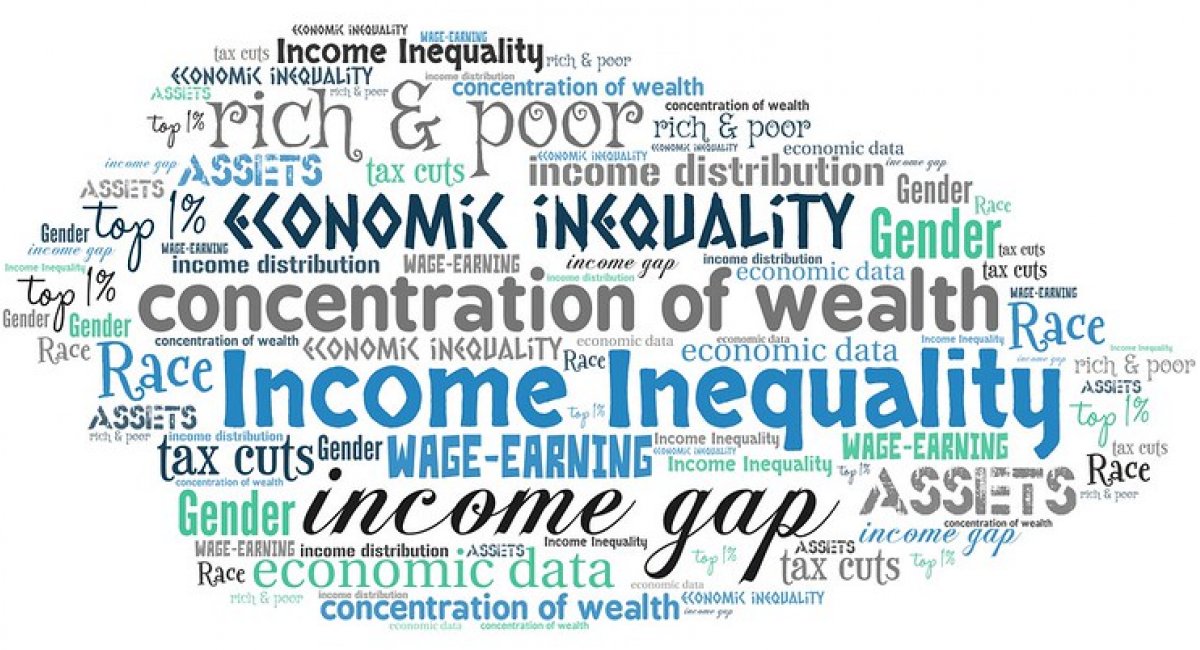
The World Social Report 2020, published by the UN Department of Economic and Social Affairs, shows that income inequality has increased in most developed countries and some middle-income countries, including China. Inequality is growing for more than 70 percent of the global population, exacerbating the risks of divisions and hampering economic and social development.
Have a look at the chart below and discuss what you see with your teacher.
Digital privacy has come to the forefront of business news over the past five years. According to Gartner, a business research company, the combination of data ethics violations like the Cambridge Analytica scandal, and data breaches like Equifax, has led to increased sensitivity among consumers about what they share and how it is used.
Please have a look at the chart below and discuss what you see with your teacher.
The Dalai Lama wrote an opinion piece for the Harvard Business Review about the importance of leadership and what makes a strong leader.
He says that the world is facing an emotional crisis where rates of stress, anxiety and depression are higher than ever. The focus on turning a profit often overrules a commitment to people and society. In organizations, he explains, people work closely together every day, but many feel lonely and stressed. This is because there is a lack of responsibility toward each other.
For many people retiring means hitting a certain age, usually above 65. It is associated with stopping one’s career and having grandchildren. Recently there has been a movement that changes the perspective on retirement. Retirement is not about how old you are, it is about a financial number you have.
This is what the Financial Independence Retire Early (FIRE) movement is about. The goal of this movement is to save and invest most of your income - about 50-75% - so that you can retire very early - in your 40s or even 30s.
According to The Harvard Business Review, studies on organizational change show that if you want to lead a successful transformation, communicating empathetically is critical. However, most leaders do not actually know how to do it. In fact, a survey of over 200 leading company executives found that 69% of respondents said that they were planning to launch or are currently conducting a change effort. Unfortunately, 50% of these same executives said they had not fully considered their team’s sentiment about the change.
When the COVID-19 pandemic closed down tourism in Thailand, thousands of taxis were abandoned by their drivers. No tourists equals no taxis. Drivers lost their income and couldn't afford to pay the rental fees for their cars. Companies struggled to stay afloat. The Ratchapruk and Bovorn Taxi co-ops together ended up with 2500 (out of 3000) cars sitting idle in parking lots. The Thai government offered no financial support.
It is not a secret that people might judge you by the way you speak. For example, if you sound confident, people might trust you.
For $200, you can now invest in the eco-fashion label Christy Dawn. The label is selling "plots" in the organic, sustainable cotton farm in India that provides the raw materials for their clothing. At the end of the season, you're paid back with store credit. If the harvest is good, you might get back more than the initial $200 you invested. On the other hand, if it's a bad year for cotton, you could lose most or all of your money.
Professional cyclist Greg Lemond said, "It doesn't get any easier; you just get faster."
Lemond is a 3-time winner of the Tour Dr France. He also won a great many other cycling races. He is considered by many to be the all-time greatest American cyclist. While other cyclists have been caught cheating via blood doping, Lemond was so strongly opposed to cheating that he quit his team when his teammates were found breaking the rules.
Raising children can be challenging. Here are some helpful tips. If you don't have kids, then think about when you were a kid.
First, praising a child’s accomplishments boosts their self-esteem.
Children develop their understanding of themselves through their parents’ attitudes. Everything counts: parents’ words, body language, voice.