The 3 clients we serve (how to talk to the HR person)
The admin layer, the education layer, and the business layer
For each company, we are serving three clients:
- the HR person;
- the student; and
- the person who signs the check.
Here, we will focus on what we can do for the HR person and the student (from the HR person's eyes) to help them see how TEF could benefit them and their company.
The 5 main questions the HR person will ask
1. How much is it going to cost?
There is no overhead for them. Just lesson fees & matriculation fees.
2. How long will it take?
It's only a couple of hours of work to set them up. It totally depends on their own internal processes (e.g. ADL was super fast; IHI took a month to read a 9-page contract because of their bureaucratic system).
3. What are the results I can expect? (What's the long-term investment?)
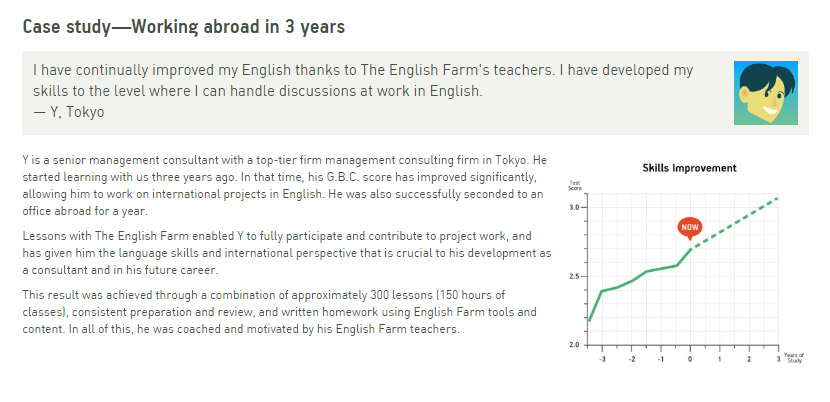
The first case study below (from the corporate enrolment page) went from OK (upper intermediate) to professionally competent enough to work in Germany after 3 years. It cost his company about 10,000 USD.
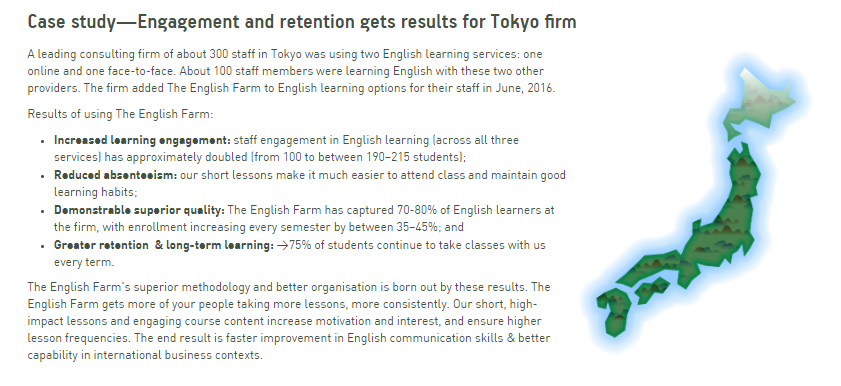
The second case study shows an increased level of engagement and retention from students at a consulting firm in Tokyo (BCG, but don't tell clients) after adding The English Farm's services. Both engagement and retention are crucial to improving language skills because frequency and consistency are what help people improve. Taking one lesson a week is only good for maintaining your level. You need to take frequent lessons at short intervals to actually improve.
4. What are the benefits for me (the HR person)? (A question they may not ask, but will be thinking internally.)
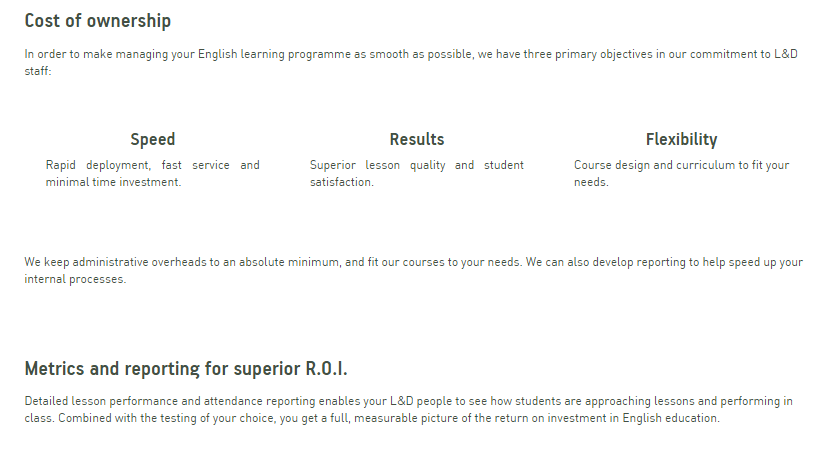
- We want to make their jobs easier (we take care of admin tasks like attendance reporting, service, motivation, and engagement/the less work they have to do, the better);
- We have live attendance reporting, and HR can just look at it when they want;
- We are also developing a TEF score that shows if the student has been taking classes regularly, showing up to class on time, etc. This will allow HR to see more (punctuality, study habits, etc.) quickly with less brainwork for them (a simple score vs having to look at the reporting); and
- We are here to solve their problems. We will continue to work with them to refine our courses and services to minimize effort on their part.
From the corporate enrolment page:
5. Why should I believe you?
Our major client is "one of the big three" in consulting (you can say this as long as you don't make it obvious it is BCG).
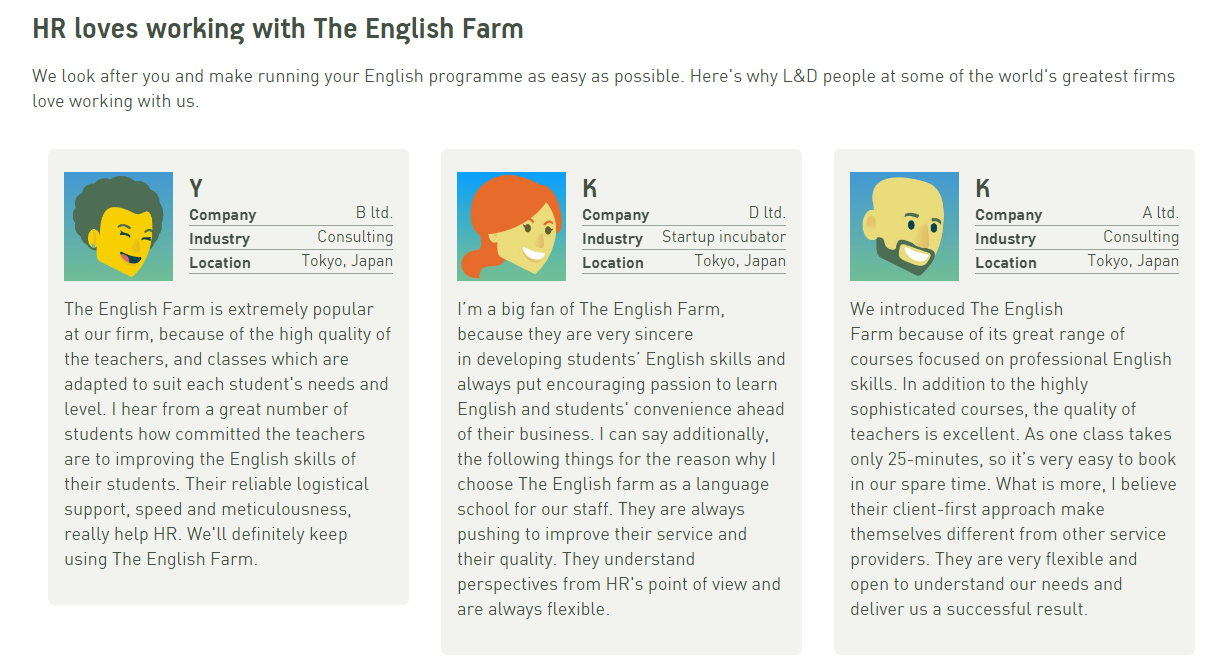
We also have HR reviews from our corporate enrolment page:
What we can do for students
- Students need to learn how to communicate with clients and coworkers (not just language-wise, but in terms of delivery and persuasive argumentation). We're there to remove the barrier so the best of the best can go to those meetings and projects.
- To HR, we say, "we teach communication skills to your staff so they can better do their jobs."
- Teach lessons customized to their industry (we can get new curriculum if it is necessary).
- We are also like English consultants/coaches—we improve the process of learning and outcomes for both students and HR. (We have a huge source of data from our existing students, and we are currently in the process of analyzing the best study habits and results of studying with TEF, etc.)
*Note: our first contact with corporate students will be during the pilot program. This is why it is essential to make a good impression during the period (and also why we cannot have pilot programs during our busy seasons May and November, or they won't be able to book our lessons).
Things to keep in mind
- We don't have a tangible presence for most people (unlike a brick-and-mortar school).
- Services are harder for HR staff to decide on because if you don't have the knowledge to judge for yourself about the service, what do you go on? (e.g. reputation, word of mouth, etc.)
- The HR person may not have taken an English lesson themselves for years. (You can ask them!)
- It's good to offer the pilot program for the HR staff, too, so they can experience our service for themselves.
- Some companies don't have an online English school option (e.g. IHI, McK, EY), so in their heads, it isn't "TEF vs other online English schools". Many companies compare us to face-to-face (brick-and-mortar) schools or in-house lessons (which tend to be group lessons). It's important to know who they are comparing us to so that we can show them how TEF can fill an unmet need.
- The cost of switching programs is quite high. (But we don't necessarily want people to switch programs. We find that student engagement increases when they can choose schools that serve them best.)
Last, but not least...
Remember that at the end of the day, we are educators. We want what's best for our students. We're not trying to compete against other schools. We're always striving to be better than we were so that we can best serve our students. It's great if companies want to switch to our services, but we are more than happy for companies to have us as an option for employees to choose from.